
The UN Security Council will vote on a Bahrain-proposed resolution regarding the Strait of Hormuz, aiming to ensure freedom of navigation amid concerns and opposition from some members.

India has voted in favour of multiple resolutions concerning Palestine at the UN General Assembly, including those affirming the Palestinian people's right to self-determination, supporting the UNRWA, and condemning Israeli settlements. These votes underscore India's consistent stance on the Palestinian issue and its historical relationship with Palestine.
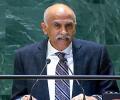
India has strongly condemned an attack on UN peacekeepers in Lebanon that resulted in the death of a Serbian Blue Helmet and injuries to two others. The nation has called for an immediate and thorough investigation to ensure accountability for the perpetrators. This incident follows a series of attacks on UNIFIL personnel amidst escalating hostilities in the region, prompting global calls for peacekeeper safety.

India has condemned the killing of a French soldier serving with the UN peacekeeping mission in South Lebanon and called on all parties to ensure the safety of peacekeepers.

The US rejected Iran's proposal to reopen the Strait of Hormuz, citing Tehran's demands for sanctions relief and access to frozen assets before nuclear program negotiations. US Ambassador Mike Waltz called the offer a "cynical attempt," while Iranian Foreign Minister Seyyed Abbas Araghchi disputed Waltz's account and reiterated Iran's readiness for both diplomacy and renewed hostilities. President Trump expressed confidence in winning the conflict soon and keeping all options, including military strikes, on the table, with denying Iran a nuclear weapon as the primary objective.
India has condemned recent attacks on UN peacekeepers in Lebanon, following the death of an Indonesian peacekeeper. India urged all parties to ensure the safety and security of the Blue Helmets and called for accountability for crimes against peacekeepers.

The UN Security Council, with India's support, has adopted a resolution condemning Iran's attacks on Gulf Cooperation Council countries and Jordan, demanding an immediate cessation of hostilities and denouncing threats to the Strait of Hormuz.

Meitei and Naga groups held massive rallies in Manipur, demanding protection for indigenous people and the abrogation of the Suspension of Operations (SoO) agreement with militant groups. The protests follow recent militant ambushes and highlight concerns over non-compliance with the SoO pact amidst ongoing ethnic violence in the state.

The United States and Iran have reached an agreement in principle to immediately and permanently halt all military operations, lift sanctions, and work towards a comprehensive final agreement within 60 days, including a significant reconstruction package for Iran.

Russia and China vetoed a Bahrain-backed UN resolution aimed at reopening the Strait of Hormuz. A resolution that was already diluted to secure their abstentions.

The UN General Assembly has adopted a resolution, backed by India, to correct the world map for a more accurate representation of continental landmasses. The resolution addresses the distortions caused by the widely used Mercator projection, which minimises the perceived sizes of regions like Africa, Latin America, and South Asia, promoting an unbalanced global view. India supports the move towards more accurate cartographic practices, specifically endorsing broader use of Equal Area map projections.
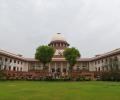
The judges questioned the government's position on arbitration, underscoring the contradiction between its resistance to enforcement and its efforts to promote India as an arbitration-friendly jurisdiction.
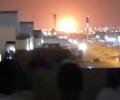
The official statement highlighted that these "blatant Iranian attacks" have also targeted members of the Gulf Cooperation Council (GCC) and several other Arab and Islamic nations.

Prime Minister Narendra Modi, addressing the BRICS summit, called for a fundamental shift in global governance, advocating for the replacement of the current 'pyramid of privilege' with a 'platform of partnership' where the Global South becomes a 'rule shaper' rather than a 'rule follower'.

The Tamil Nadu Assembly has unanimously passed a resolution urging the Union Government to grant a permanent exemption from the Teacher Eligibility Test (TET) for government teachers appointed before August 23, 2010. This move aims to protect the job security and benefits of over 3.28 lakh experienced educators who face the risk of losing their positions due to the mandatory TET requirement.

India has expressed firm opposition to attacks on merchant shipping amidst the ongoing Iran conflict, revealing that several Indian nationals have died or are missing due to these incidents. The nation also called for restraint, de-escalation, and prioritising civilian safety in the region.

This is the first UN sanction on Iran.

The New Delhi Municipal Council (NDMC) is establishing a 24x7 command centre and implementing extensive civic preparations to ensure the smooth hosting of the 18th BRICS Summit. These measures include enhanced sanitation, beautification, traffic management, and coordination among various agencies to present a welcoming city for world leaders.

The 15-member body strongly condemned North Korea's ballistic missile launches.

Chief ministers from southern states convened at the Southern Zonal Council meeting in Kovalam, where Karnataka CM DK Shivakumar advocated for the 1971 census as the basis for delimitation and a freeze on Lok Sabha seats, while also addressing the contentious Cauvery water and Mekedatu dam issues.

The 15-member Council held a formal vote here to elect Guterres, the former UN High Commissioner for refugees had emerged as the "clear favourite" to succeed Ban Ki-moon, 72, as the 9th Secretary General.

Chief Justice of India Surya Kant stated that while artificial intelligence (AI) can augment judicial reasoning, it cannot substitute judicial conscience, and a permanent apex body is proposed to supervise AI adoption and accountability within the judiciary.

The BRICS grouping adopted a consensus joint declaration in New Delhi, successfully navigating differences on the West Asia conflict but notably omitting any direct mention of US strikes on Iran or Iranian military attacks on Gulf Arab nations. The declaration also criticised Israel's actions in Gaza and called for a concerted approach against terrorism.

Suspension is the only method provided for in the UN resolution that established the Human Rights Council back in 2005.

The embassy also said that the exit must be undertaken in coordination with the mission.

Amidst ongoing ethnic tensions, a new political alignment in Manipur sees Meitei and Naga groups uniting to demand an update to the National Register of Citizens with a 1951 base year, a move fiercely opposed by Kuki-Zo communities who fear it will disenfranchise them.

UN Secretary-General Antonio Guterres has expressed deep concern over US President Donald Trump's warning to Iran and appealed for the re-establishment of freedom of navigation in the Strait of Hormuz.

Prime Minister Narendra Modi, addressing the SCO summit in Bishkek, called for a united front against terrorism and its financing, rejecting double standards. He emphasised resolving conflicts through dialogue and diplomacy, not battlefields. Modi also highlighted that connectivity projects must respect national sovereignty and territorial integrity, a veiled reference to China's Belt and Road Initiative. India's vision for SCO rests on security, connectivity, and opportunity.
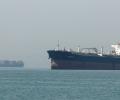
As tensions in the Middle East approach a critical juncture, reports have surfaced regarding a draft memorandum of understanding between the United States and Iran aimed at de-escalating the ongoing conflict, Iranian state media reported on Wednesday.

India has voted in favour of a draft resolution in the United Nations General Assembly that expressed deep concern over Israel not withdrawing from the Syrian Golan.

India strongly responded to Pakistan's remarks on Jammu and Kashmir and the Indus Waters Treaty at the UN Security Council, accusing Pakistan of supporting terrorism and violating the spirit of the Indus Waters Treaty.

Iran has put forward a comprehensive 10-point framework that it says forms the basis of a complete resolution.

India has expressed strong concerns over attacks on commercial ships in the Strait of Hormuz, citing its importance to India's energy and economic security. Ambassador Yojna Patel highlighted the need to respect international law and ensure the safety of seafarers, while also addressing broader Middle East issues including the situation in Gaza and Lebanon.

Addressing the 36th extraordinary session of the Council of the International Maritime Organisation (IMO) held on Thursday in London, the Indian envoy said, "India remains deeply concerned about the evolving situation and continues to call for de-escalation through dialogue and diplomacy, with utmost restraint and priority being given to the safety of civilians."

'Actual implementation of the 14-point agreement is proving hard to achieve let alone striking and sustaining a long-term treaty or deal.'

'On behalf of the Islamic Republic of Iran, I express gratitude and appreciation for my dear brothers HE Prime Minister of Pakistan Sharif and HE Field Marshal Munir for their tireless efforts to end the war in the region.'

He also said that his country would continue to talk about the Kashmir issue "through channels that are acceptable" and prayed that "the issue is amicably resolved".

Manipur Chief Minister Y Khemchand Singh expressed optimism following a meeting with the Kuki Zo Council, viewing it as a positive step towards restoring peace and trust between the Meitei and Kuki communities in the state.

Russian President Vladimir Putin and Chinese President Xi Jinping have reaffirmed their commitment to dismantling global hegemonism and building a 'multipolar world' during high-level talks in Beijing.
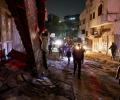
India voted in favor of a United Nations General Assembly resolution that called for the withdrawal of Israel from the Palestinian territory occupied since 1967, including East Jerusalem, and reiterated the call for achieving a comprehensive, just and lasting peace in West Asia. The resolution, tabled by Senegal, was adopted with 157 nations voting in favor, while eight nations voted against it and seven abstained.
